Sourdough baking methods compared

Seven ways to bake a sourdough loaf at home, from a Dutch oven to a plain oven tray, compared on steam, heat, cost, ease and crust.

Which method should you choose?

Best for beginners

Dutch Oven

The lid handles the steam, so there is little to get wrong: preheat, load, bake.

Best for budget

Regular Oven

Nothing to buy: bake on the tray you already own, with a pan of water for steam. A pizza stone ($20-50) is the cheapest upgrade.

Best heat from below

Baking Steel

Fast, strong heat into the base of the loaf, with room for two loaves. You add the steam yourself.

Easiest to load

Combo Cooker

You lower the dough onto a shallow pan instead of into a deep, hot pot. It traps steam the same way a Dutch oven does.

Quick comparison

Method Steam retentionHeat distributionLow costEase of useCrust
Dutch Oven
5/5
4/5
2/5
5/5
5/5
Baking Steel
2/5
5/5
2/5
3/5
4/5
Pizza Stone / Baking Stone
2/5
3/5
4/5
3/5
3/5
Cast Iron Combo Cooker
5/5
4/5
3/5
4/5
5/5
Open Oven with Steam
3/5
3/5
5/5
2/5
4/5
Regular Oven (No Special Equipment)
2/5
2/5
5/5
3/5
2/5
Air Fryer
1/5
3/5
4/5
4/5
2/5

Scores are relative comparisons. A lower score doesn't mean a method is bad; other methods may simply excel in that area.

Each method in detail

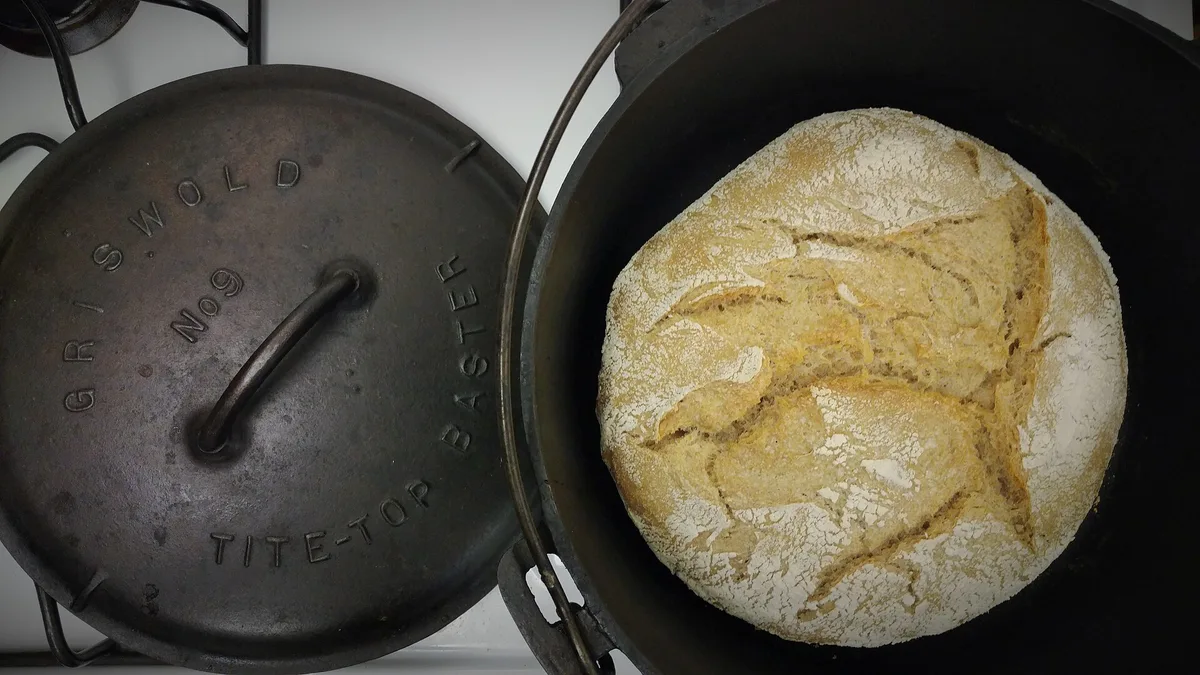
A seasoned cast-iron Dutch oven seen from above, lid off beside it, with a floured, scored loaf baked inside.
A cast-iron Dutch oven (Griswold No. 9) with its lid off. The lid traps the dough’s steam for the first part of the bake. Photo: “No-knead sourdough bread in Griswold Dutch Oven” by Nutrition, Food Safety & Health, CC0, via Wikimedia Commons.

Dutch Oven

A heavy lidded pot, usually cast iron. Preheated with the lid on, it holds in the steam coming off the dough for the first 20 minutes; then the lid comes off so the crust can brown. The most common setup for home sourdough.

Best for: Beginners, One loaf at a time, A reliable crust

Pros and cons

Pros

  • Traps steam with no extra setup
  • Reliable oven spring and a well-browned crust
  • Simple: preheat, load, bake
  • Fits in any standard home oven

Cons

  • Heavy and awkward to handle when hot
  • Limited to one loaf at a time
  • Costs more up front ($40-90 for plain cast iron; enamelled pots cost more)
  • The pot sets the shape: round or oval loaves only
Temperature
Bake at 450–500°F
Steam
Lid traps moisture released from dough during first 20 minutes
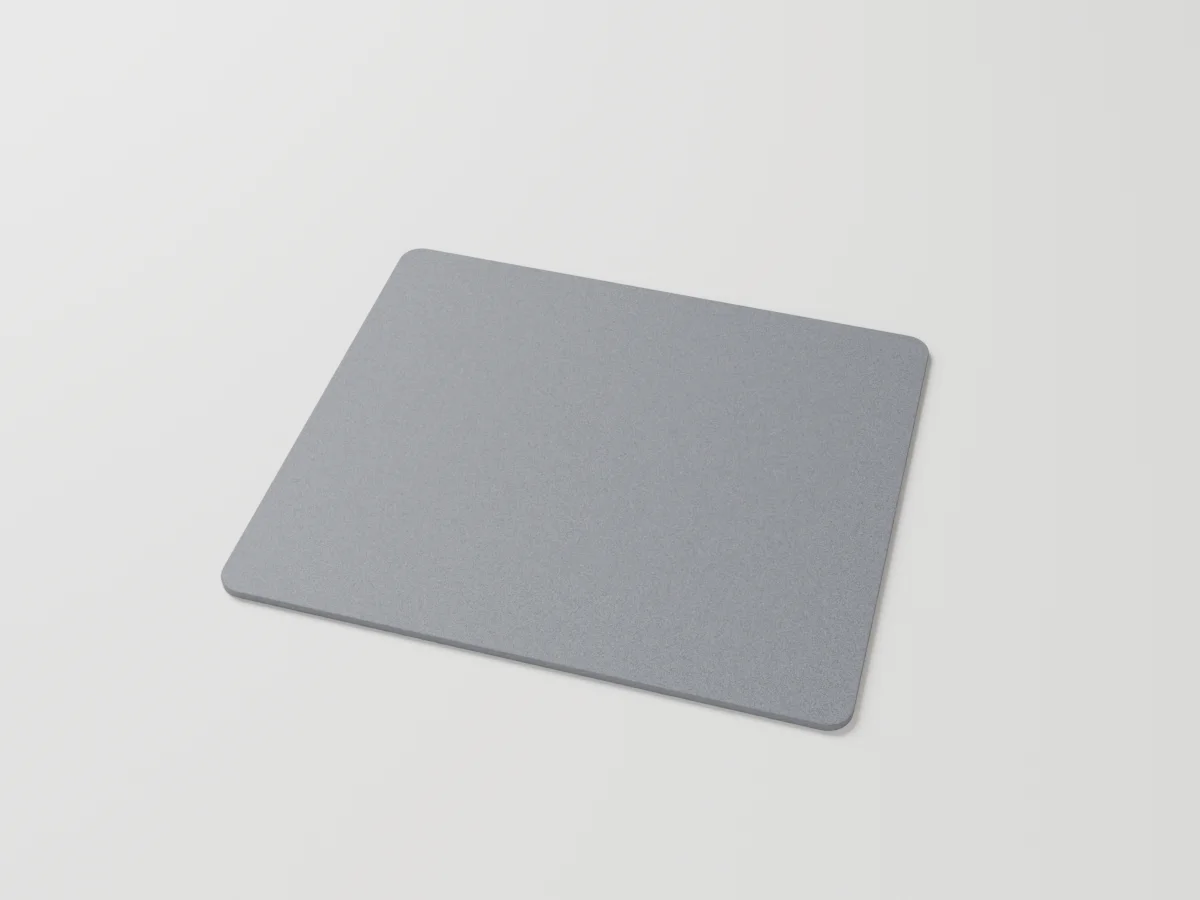
A flat, rectangular grey steel plate with small rounded corners, lying on a pale surface.
Illustration, modelled on the maker’s product photos.

Baking Steel

A flat slab of steel, usually about 1/4 inch thick. Steel passes heat into the dough faster than stone, so the loaf gets a strong burst of heat from below. It holds no steam, so you add steam yourself.

Best for: Bakers happy to add their own steam, Two loaves at once, Pizza as well as bread

Pros and cons

Pros

  • Fast heat from below helps oven spring
  • Will not crack, unlike a stone
  • Room for two loaves at once
  • Also good for pizza and flatbreads

Cons

  • Needs a separate steam setup
  • Heavy: a 16 x 14 x 1/4 inch steel weighs about 15 lb
  • Costs more ($80-150)
  • Takes 45-60 minutes to preheat
Temperature
Bake at 450–500°F
Steam
Requires ice cubes, water pan, or spray bottle for steam
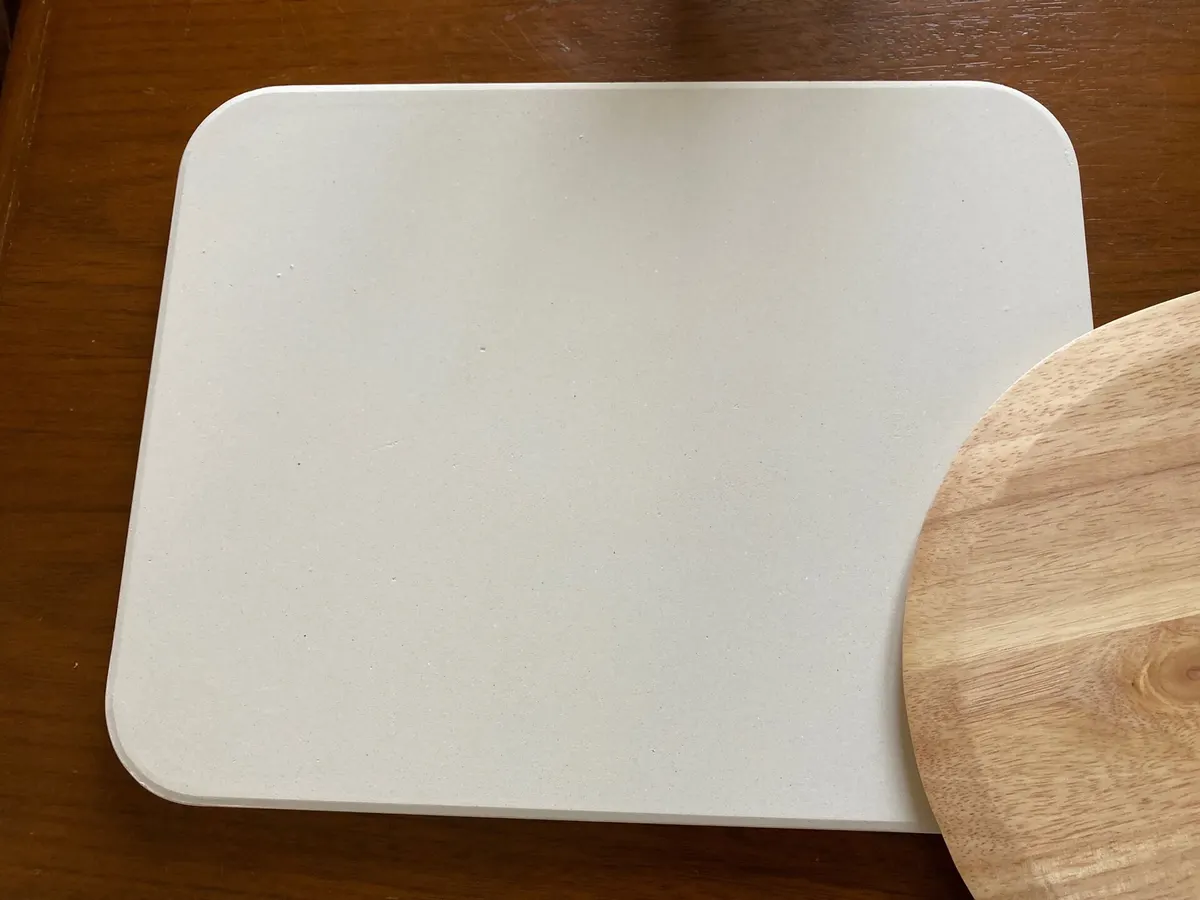
A pale, matte rectangular baking stone with rounded corners on a wooden table, a round wooden board overlapping one edge.
A rectangular baking stone: pale, matte and unglazed, with rounded corners. Photo: “Pierre réfractaire” by Pierre.hamelin, CC BY-SA 4.0, via Wikimedia Commons.

Pizza Stone / Baking Stone

A slab of ceramic or cordierite that stores heat and gives the loaf steady heat from below, more gently than steel. Cheaper than steel and easy to find, but it can crack.

Best for: Tight budgets, Pizza and bread, A first upgrade from a tray

Pros and cons

Pros

  • Inexpensive ($20-50)
  • Even, steady heat from below
  • Easy to find in kitchen shops
  • Also good for pizza

Cons

  • Can crack with a sudden temperature change (cold water, a cold surface)
  • Needs a separate steam setup
  • Takes 45-60 minutes to preheat
  • Passes heat more slowly than steel
Temperature
Bake at 425–500°F
Steam
Requires ice cubes, water pan, or spray bottle for steam

Cast Iron Combo Cooker

A two-piece cast iron set: a shallow skillet and a deep pot. Flipped over, the skillet holds the loaf and the pot goes on top as the lid. You lower the dough onto a shallow pan instead of into a deep, hot pot.

Best for: Anyone nervous about loading a deep pot, Round loaves, Cooks who want a skillet too

Pros and cons

Pros

  • Easier and safer to load: no reaching into a deep, hot pot
  • Traps steam the same way a Dutch oven does
  • Each half also works on its own as a skillet or a pot

Cons

  • Still limited to one loaf at a time
  • Heavy: over 10 lb for the pair
  • The deep lid is awkward to lift off when hot
  • Shape limited to round loaves
Temperature
Bake at 450–500°F
Steam
The deep half, used as the lid, traps the dough’s steam as a Dutch oven does

Open Oven with Steam

Baking on a stone, steel or tray with steam you add yourself: boiling water into a preheated pan, ice cubes, or lava rocks. It copies how a bakery deck oven works, but a home oven vents steam, so it takes practice.

Best for: Experienced bakers, Batches, Baguettes and other long shapes

Pros and cons

Pros

  • Nothing special needed beyond a metal pan
  • Any size or shape of loaf
  • Several loaves at once
  • Good for long shapes such as baguettes

Cons

  • Hard to keep the steam in: home ovens vent it
  • Risk of steam burns when pouring water
  • Results vary from oven to oven
  • Takes practice to time the steam
Temperature
Bake at 400–475°F
Steam
Ice cubes on hot pan, spray bottle, or lava rocks with boiling water
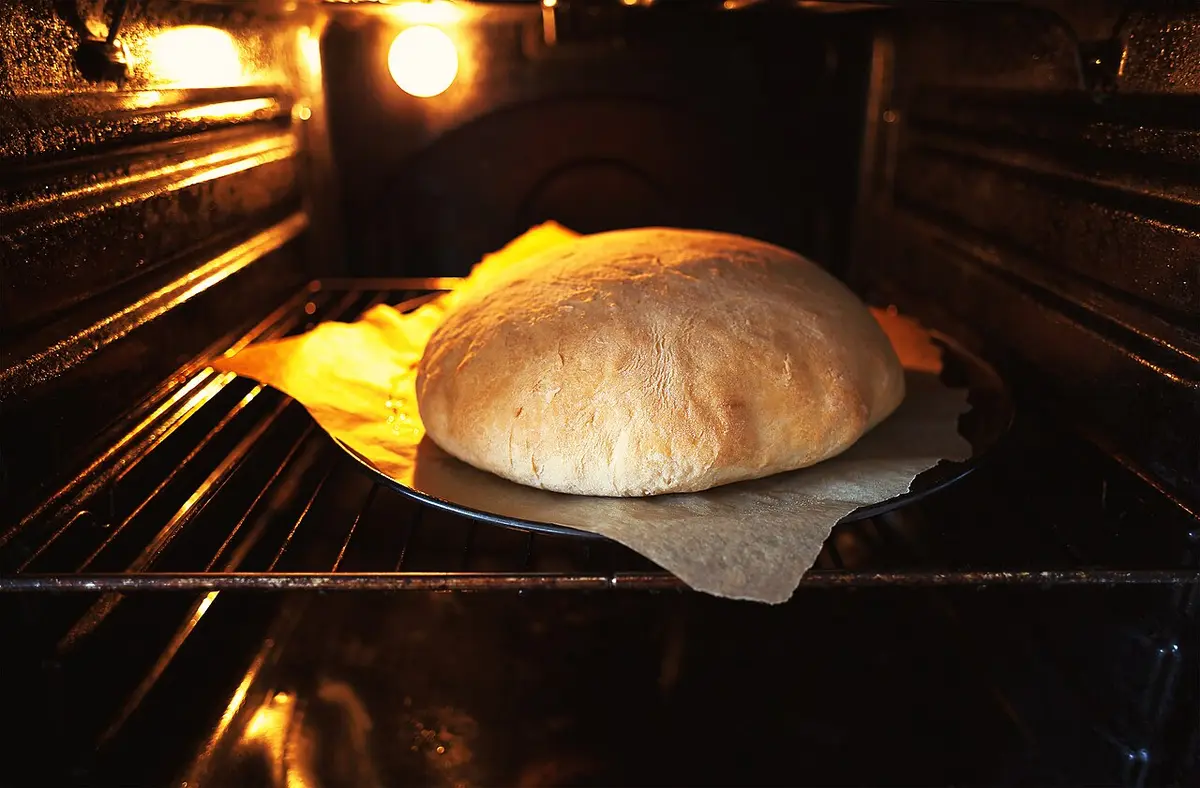
A round loaf on baking paper on a plain metal pan, sitting on the wire rack of a lit home oven.
A loaf baking on a plain metal pan lined with baking paper, on the rack of an ordinary home oven. Photo: “Baking Bread at Home (33583240488)” by Dejan Krsmanovic, CC BY 2.0, via Wikimedia Commons.

Regular Oven (No Special Equipment)

Baking on an ordinary sheet pan or tray in a standard home oven, with steam improvised from a pan of water. The setup everyone already owns. Results are a step behind covered baking, but every loaf on this site can be baked this way.

Best for: First loaves, Zero-budget setups, Batch baking on trays

Pros and cons

Pros

  • No equipment to buy: it uses what every kitchen has
  • Any loaf shape or size, including batch bakes
  • Nothing heavy to lift in and out of a hot oven

Cons

  • Weaker steam means less oven spring and a duller crust
  • Bottom crust stays softer without a preheated surface
  • Results vary more between ovens than any other method
Temperature
Bake at 425–475°F
Steam
Preheat a metal pan on the bottom rack; pour in a cup of boiling water (or a tray of ice cubes) as the loaf goes in, then close the door quickly
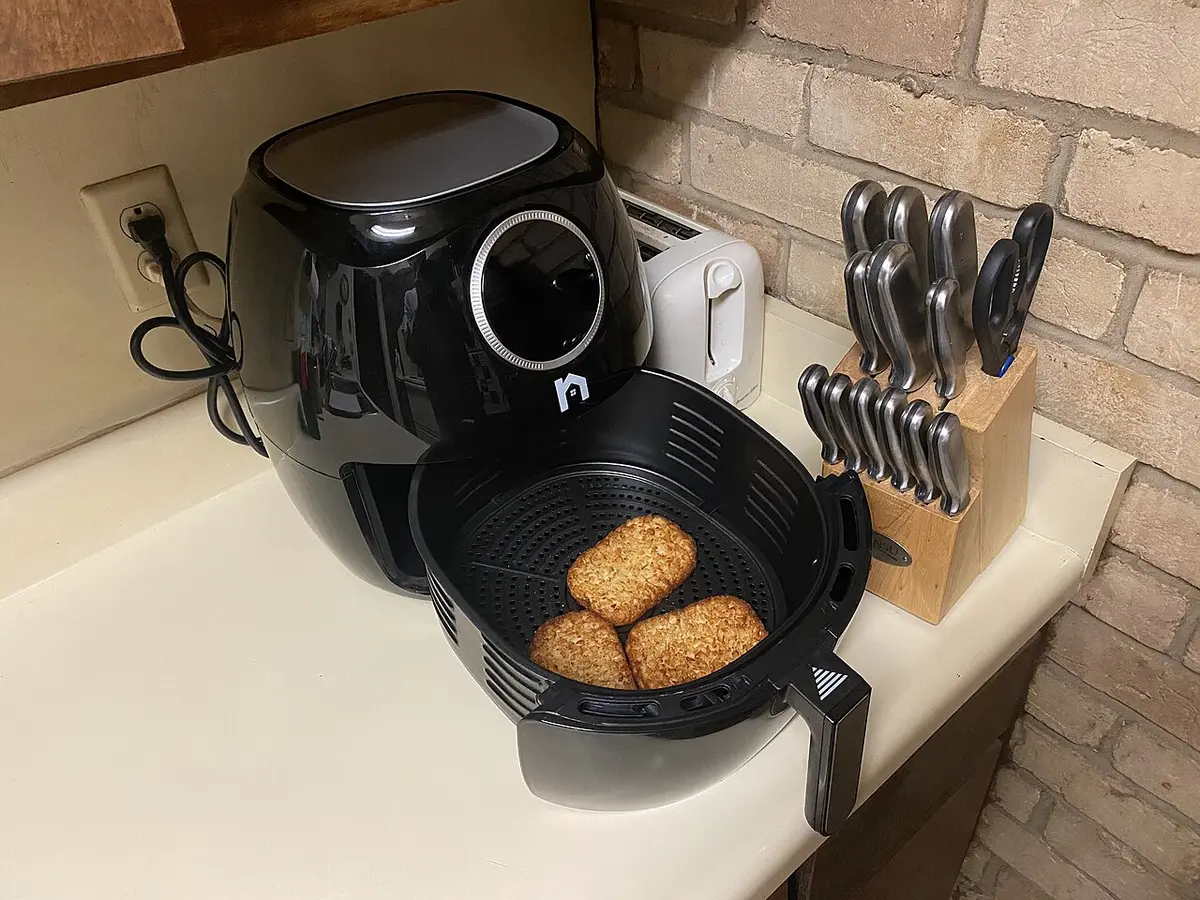
A black basket-style air fryer on a kitchen counter with its basket pulled out.
A basket-style air fryer with the basket pulled out. A typical basket fits a small loaf of about 400 to 500 g of dough. Photo: “Air Fryer 2020” by I am R., CC BY 2.0, via Wikimedia Commons.

Air Fryer

Baking a small loaf (roughly 400-500 g of dough) in a basket or oven-style air fryer. A real option for small kitchens and single bakers, with honest trade-offs: the fan browns the crust fast, most models cannot hold steam, and results vary widely between machines.

Best for: Small loaves, Kitchens without an oven, Energy-conscious baking

Pros and cons

Pros

  • Preheats in minutes and uses far less energy than an oven
  • Right-sized for one or two people
  • Works where there is no full-size oven at all

Cons

  • Only small loaves fit: roughly 400-500 g of dough
  • The fan dries the surface, so expect less oven spring and a darker, harder crust
  • No room for a steam setup in most models
  • Behaviour varies a lot between models, so the first bake is an experiment
Temperature
Bake at 350–400°F
Steam
Most models cannot hold steam; covering the loaf loosely with foil for the first 20 minutes traps some moisture instead

Ready to bake?

Pick when you want the loaf out of the oven and get a clock time for every step, worked back from that moment.

Plan a bake